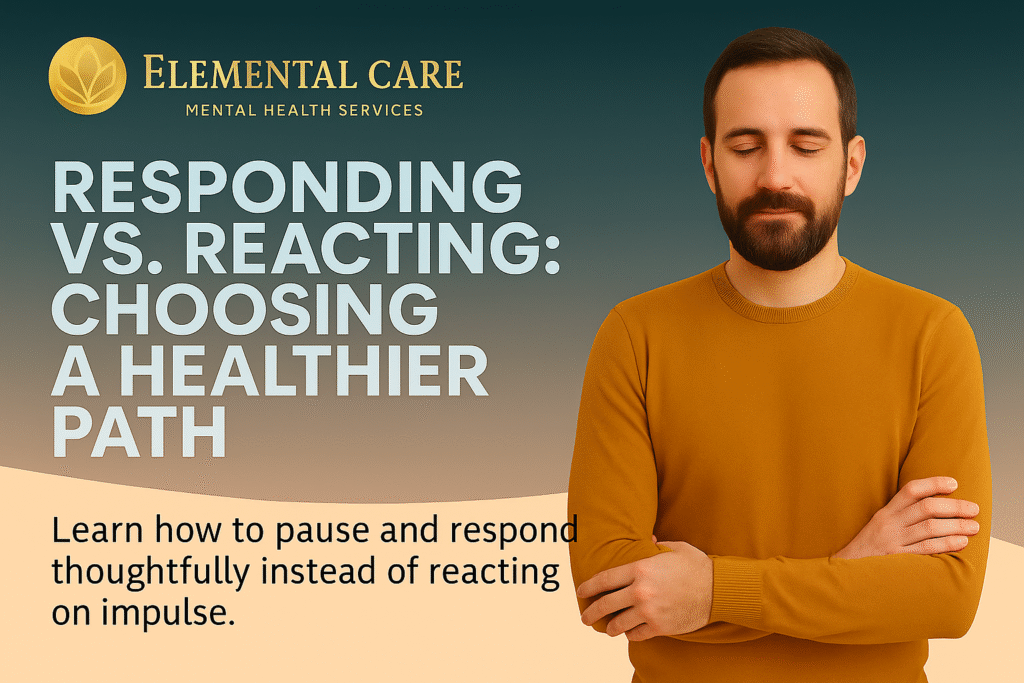
Responding vs. Reacting:
Choosing a Healthier Path
Setting the Stage
Life constantly throws challenges our way — from stressful conversations to unexpected obstacles. In those moments, we often act on impulse. That’s reacting. But when we pause, reflect, and choose our words or actions with intention, we are responding. This difference may sound subtle, but it can completely transform how we move through relationships, work, and personal struggles.
Why the Difference Matters
Reactions are automatic. They’re driven by heightened emotion — anger, fear, or frustration — and often escalate situations.
Responses are intentional. They come from a calm, thoughtful space where you’ve taken a breath and considered what outcome you truly want.
When we learn to respond instead of react, we reduce conflict, build trust, and feel more in control of ourselves.
The Cost of Reacting
Strained relationships due to harsh words or defensive behavior
Regret after saying or doing something in the heat of the moment
Escalated conflicts instead of resolution
Emotional exhaustion from constantly being “on edge”
The Power of Responding
Creates space for empathy and understanding
Builds healthier communication habits
Strengthens relationships at home, work, and beyond
Leaves you feeling grounded and aligned with your values
How to Practice Responding Instead of Reacting
Pause before speaking. Even a few seconds of silence can shift your brain from “fight or flight” into thoughtful choice.
Take a breath. A deep inhale and slow exhale calms your nervous system.
Notice your triggers. Recognize what pushes your buttons so you can prepare for calmer handling next time.
Ask yourself: What do I want the outcome of this interaction to be?
Choose words intentionally. Speak from clarity, not from the intensity of the moment.
When It Feels Impossible
Responding with calm intention doesn’t always come easily, especially when stress, anxiety, or past hurts are involved. That’s where professional support helps. A therapist can guide you through identifying triggers, practicing tools for mindfulness, and building confidence in your ability to respond thoughtfully.
Closing
At Elemental Care in Winston Salem NC,, we believe you don’t have to navigate these challenges alone. Learning to respond rather than react takes practice, patience, and support — but it’s a skill that can transform your relationships and your peace of mind.